















Microsoft Fabric Migration That Protects Business Continuity
Our Microsoft Fabric migration service focuses on protecting reporting, trust, and accountability during high-risk tenant transitions.

Uninterrupted Reporting Continuity
Business-critical dashboards and reports remain available throughout the Microsoft Fabric migration service, ensuring you can make business decisions without delays.

Validated Data Accuracy
Semantic models and reports produce the same results after migration, protecting trust in numbers and preventing silent data inconsistencies that often surface weeks after poorly validated tenant migrations.

Lower Migration Risk
Structured validation and repeatable execution reduce the likelihood of post-migration incidents, helping organisations complete Microsoft Fabric tenant migration with confidence instead of reactive firefighting.
What the Microsoft Fabric Migration Service Includes
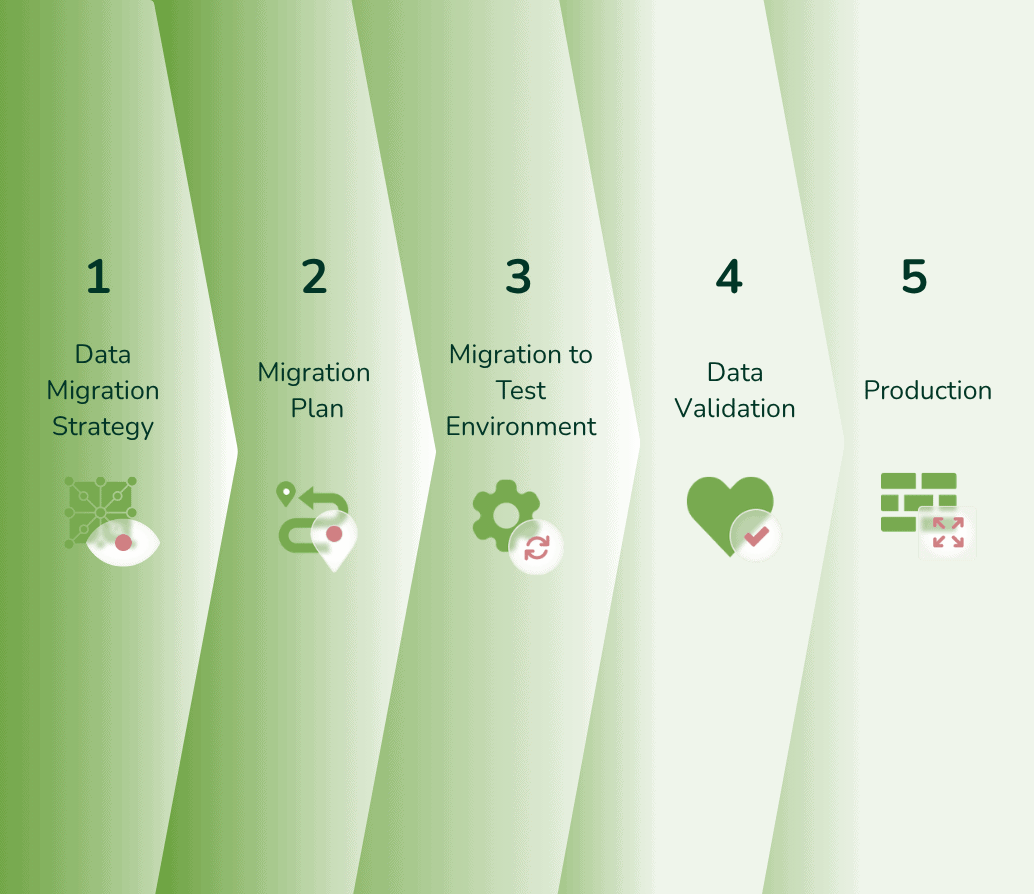
This service provides a structured, implementation-focused approach to Microsoft Fabric tenant migration, covering the technical and operational elements required for a safe transition.
You get:
- Assessment of existing Microsoft Fabric and Power BI environments, including dependencies, permissions, and reporting assets
- Automated, source-controlled migration of Fabric assets between tenants
- Validation of migrated reports and semantic models to confirm consistent outputs
- Controlled tenant switchover to minimise disruption to business users
- Clear technical documentation supporting governance and future operations
How We Work
Why Choose Eunoia?
What Makes Our Approach Different?

Microsoft Specialised Partner Expertise
Eunoia holds the Microsoft Analytics on Azure Specialisation, delivering hands-on expertise for Microsoft Fabric and Power BI migrations in complex, real-world environments.
Certified, Practical Delivery
Our work reflects proven implementation patterns across Microsoft and Databricks platforms, including platform-embedded governance rather than documentation-only approaches.

Built for Operational Safety
We focus on validation, repeatability, and clear handover, so migrations reduce risk instead of transferring it to internal teams.

Get in Touch
Fill in the form, and we’ll reach out to you soon.
"*" indicates required fields

Our Resources
Explore a range of insightful content that helps you better understand data and AI. Our collection includes informative blog posts, practical guides, and real-world case studies that cover key topics and trends.
Case Studies
Insurance Data Migration to a Cloud Solution for Atlas Insurance


Gordian Holdings’ Success Story: Enhancing Efficiency with Data Centralisation

Our Best Blog Content

Data Lakehouse vs Data Warehouse vs Data Lake: Which Does Your Business Need?


Frequently Asked Questions
What is Microsoft Fabric Migration?
Microsoft Fabric migration is the structured process of moving an organisation’s existing analytics and reporting environment into Microsoft Fabric. This may include migrating Power BI reports, data pipelines, warehouses, lakehouses, semantic models and security configurations.
The goal is to consolidate analytics workloads into a unified Fabric environment while preserving reporting continuity, performance and governance. A proper migration involves assessing dependencies, mapping assets, rebuilding or optimising workloads where needed, validating outputs side by side, and ensuring permissions and capacities are correctly configured.
It is not just a technical move. It is an opportunity to simplify architecture and reduce long-term complexity.