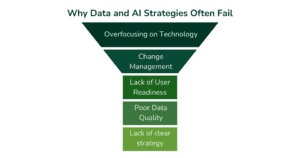
While these challenges may seem daunting, they also present opportunities to design better frameworks and roadmaps for success. By addressing these pain points with clear objectives, robust processes, and a focus on collaboration, businesses can get more value from their data and AI investments. Below are key steps to building an effective Data and AI strategy:
- Define Clear Business Objectives

The foundation of any data and AI strategy is alignment with business goals. Whether it’s improving customer experience, optimising operations, or exploring new revenue streams, clarity in objectives ensures that data initiatives deliver tangible value. Engage cross-functional leaders early to ensure alignment and commitment.
- Establish a Data-Driven Culture

A successful strategy depends on people as much as technology. Foster a culture where decisions are driven by data, not intuition. Invest in training and upskilling teams to be comfortable interpreting and using data insights.
- Build a Scalable and Flexible Data Platform
 Your data architecture should adapt as the business changes. Modern technologies like cloud platforms, Delta Lake, or hybrid data solutions support flexible scaling, efficient data processing, and integration with AI models. Adopting a Medallion architecture (bronze, silver, gold layers) can simplify data engineering and ensure high-quality data pipelines. Learn more about building modern data infrastructure.
- Prioritise Data Governance and Security
 With data as a strategic asset, governance and security are non-negotiable. Implement robust data governance policies to ensure accuracy, consistency, and compliance with regulations like GDPR or CCPA. Address security concerns by encrypting sensitive data and employing access controls.
- Focus on Strategic AI Use Cases
 AI implementation should not be about chasing trends but solving meaningful business problems. Begin with high-impact, quick-win use cases—like predictive maintenance, customer segmentation, or demand forecasting. Success in these areas builds momentum and trust in AI initiatives.
- Invest in Collaboration and Partnerships
 Collaboration supports faster progress. Partner with technology providers, academic institutions, or startups to keep pace with the market. Platforms like Databricks or Microsoft Fabric offer integration capabilities that support AI initiatives at scale.
- Measure, Optimise, Repeat
 A strategy is only as good as its execution. Set clear KPIs to measure progress and impact. Continuously refine your approach based on results, new opportunities, and evolving business needs.
These lessons highlight the importance of a balanced approach that combines technical expertise with organisational readiness and strategic clarity.